Comprehensive Mapping Report published
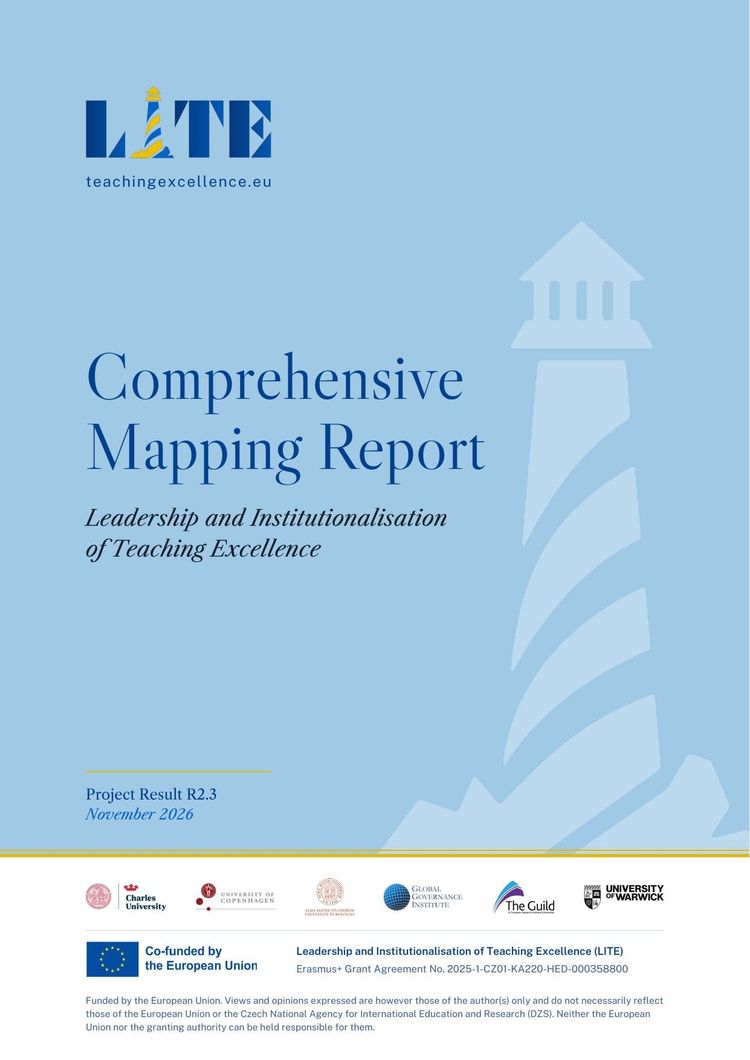
The Comprehensive Mapping Report (Project Result R2.3) is now available open access.
Read more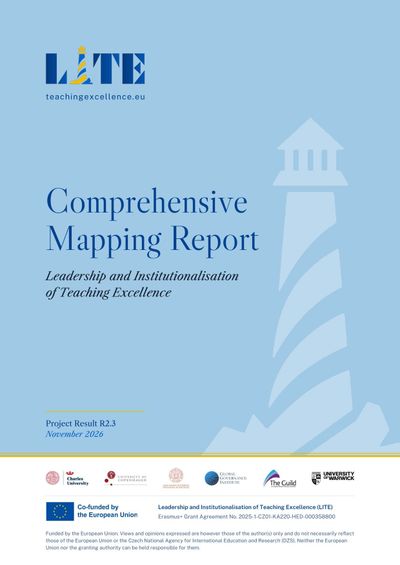

New · November 2026
This report examines how teaching excellence is institutionalised across higher education institutions, with particular emphasis on the relationship between educational leadership, Centres for Teaching and Learning, university teaching staff and administrative staff.
Project Result R2.3
LITE ConsortiumNovember 202667 pages, PDF
The report examines how teaching excellence is institutionalised across higher education institutions, with particular attention to the relationship between educational leadership, Centres for Teaching and Learning, university teaching staff and administrative staff.
It combines desk research on national and institutional approaches with the LITE Survey, which gathered responses, views and examples from educational leaders, CTL leaders, CTL staff and university teachers. No single organisational model prevails. The findings point instead to recurring conditions that decide whether teaching excellence becomes an institutional responsibility or stays dependent on individual initiatives.
At a glance
How to cite this report
LITE Consortium (2026). Comprehensive Mapping Report (Project Result R2.3). Erasmus+ project Leadership and Institutionalisation of Teaching Excellence (LITE). https://doi.org/10.5281/zenodo.24499115
Licensed under CC BY 4.0. You are free to share and adapt it with attribution.
Contents
New · November 2026
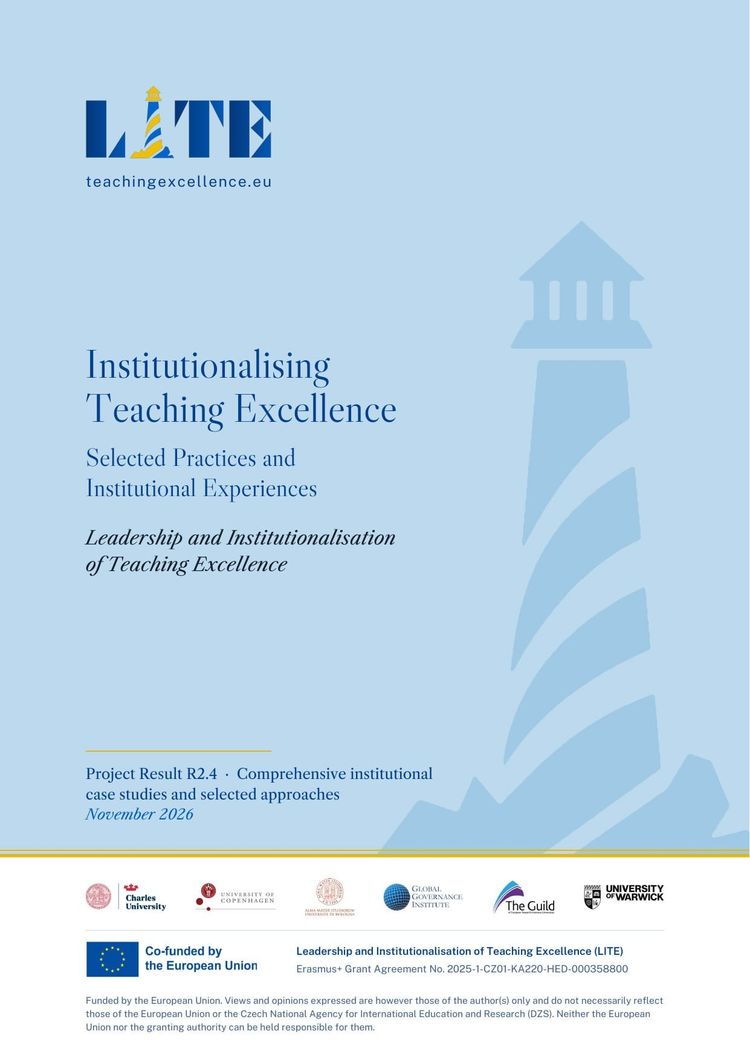
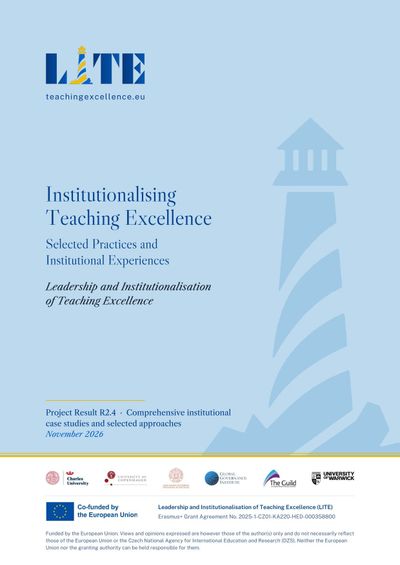
This report presents three in-depth institutional case studies from Charles University, the University of Bologna and the University of Copenhagen, followed by shorter case studies from the LITE mapping, organised around six recurring challenges.
Selected Practices and Institutional Experiences
Project Result R2.4
LITE ConsortiumNovember 202653 pages, PDF
The report complements the Comprehensive Mapping Report. Where the mapping gives the broad comparative picture, this report looks closely at how particular arrangements work within their organisational context and how they developed.
It does not assume there is one model universities should follow. Institutions differ in governance, resources, culture and experience, so the practices are presented in context, to support learning across institutions.
 Establishing a CTL: the CTL network at Charles UniversityCharles University
 Institutionalising support for teaching excellenceUniversity of Bologna
 TEACH, Teaching and Learning CentreUniversity of Copenhagen
Selected practices from other universities identified through the LITE mapping, organised around six recurring challenges.
At a glance
How to cite this report
LITE Consortium (2026). Institutionalising Teaching Excellence: Selected Practices and Institutional Experiences (Project Result R2.4). Erasmus+ project Leadership and Institutionalisation of Teaching Excellence (LITE). https://doi.org/10.5281/zenodo.24499117
Licensed under CC BY 4.0. You are free to share and adapt it with attribution.
Contents
Training programme
Each partner leads one programme, built on the LITE Competence Framework and open to leaders and multipliers across Europe.
Early 2027
Each curriculum is piloted through a blended programme combining a self-paced pre-training module, a live online training day with four interactive sessions, and a post-training reflective module to consolidate learning and collect feedback. The programmes run between October 2026 and March 2027.
Welcome to the LITE Project
LITE equips university leaders, academic managers, teaching staff and administrators with the tools and competences needed to institutionalise and reward teaching excellence.




The Comprehensive Mapping Report (Project Result R2.3) is now available open access.
Institutionalising Teaching Excellence (Project Result R2.4) is now available open access.
The LITE project website is now online. It presents the partnership and its four strands of activity, and it is where the project publishes its results, training calls and events.

LITE runs four blended programmes, each led by one partner, built on the LITE Competence Framework and open to leaders and multipliers across Europe.
The call for participants opens soon. Subscribe to hear when it does.
Universities across Europe are under growing pressure to improve and reward teaching, yet leadership approaches, support structures and institutional practices remain uneven and often disconnected.
Without leadership from the top of higher education institutions, genuine efforts for rewarding and stimulating the teaching careers and impact of academics and professional staff members leading CTLs will remain limited in terms of lasting impact.
The project's ambition goes beyond producing useful trainings and tools for universities. Its goal is to change how European universities understand and advance teaching, strategic leadership and the institutionalisation of teaching excellence.
The LITE Strategic Cooperation Plan establishes ENLITE, a permanent European Network for Leadership and Institutionalisation of Teaching Excellence, hosted by the Global Governance Institute in Brussels. ENLITE coordinates policy dialogue and future joint funding proposals, and maintains the LITE Portal and Self-Assessment Tool as open-access resources beyond the funding period.
 Tomáš Weiss
Charles University
 Michal Urban
Charles University
 Bartlomiej Wróblewski
Charles University
 Zuzana Krulichová
Charles University
 Joachim Koops
Global Governance Institute
 Silviu Piros
Global Governance Institute
 Peder Hjort-Madsen
University of Copenhagen
 Lise Toft Henriksen
University of Copenhagen
 Mia Høj Mathiasson
University of Copenhagen
 Filippo Andreatta
University of Bologna
 Nicola De Luigi
University of Bologna
 Francesco Niccolò Moro
University of Bologna
 Loris Vergolini
University of Bologna
 Giovanni Amerigo Giuliani
University of Bologna
Subscribers receive new results, training calls and events by email as they are released.